
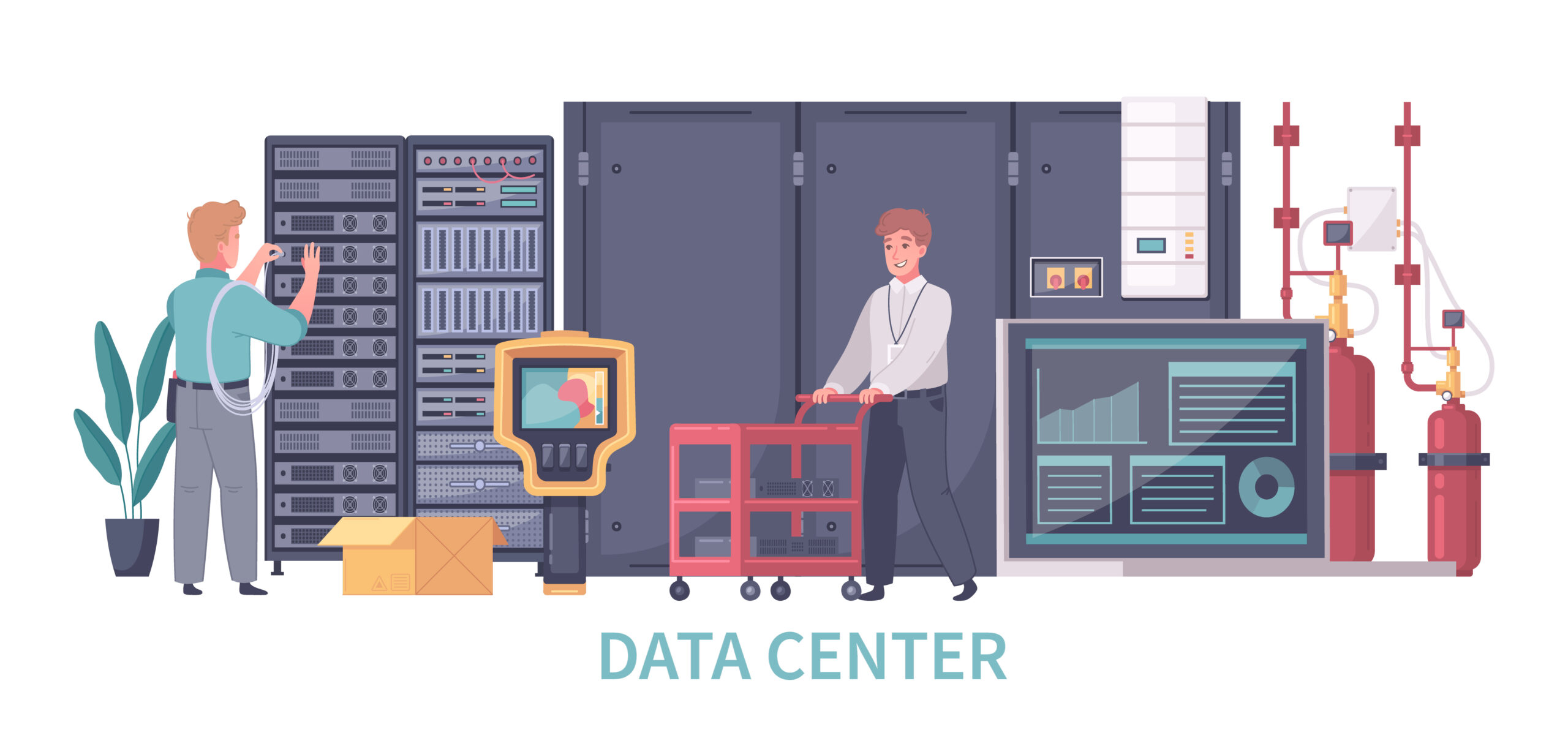
A Practical, Human-Friendly Guide for Anyone Planning One
Building a data center is not just putting servers in a shiny room. It’s more like building a real, living ecosystem, where power and cooling and security and connectivity all combine seamlessly, together with countless tiny decisions that never break down.
Whether you’re designing a data center or just want to know what makes one operate so well, this guide cuts through the complexity and explains everything in simple everyday language. No jargon-heavy engineering lectures here. Just straightforward, no-nonsense information that you can put to the test or simply read because it interests you.
1. Start With the Ground You Build On- Site Selection
Think of your data center as a long-term home for mission-critical operations. You wouldn’t build a dream home on unstable soil, right? The same rules apply here.
To build a reliable data center, you need to choose a location that checks a few boxes, an approach consistently followed by experienced data center builders in India who understand the long-term operational and compliance demands of such facilities.
1. Strong and stable power supply
Your facility will draw massive power continuously. Real-world guidance emphasizes choosing a site with dependable grid capacity and minimal outage history
2. Safe from natural threats
Flood zones, earthquake faults, and wildfire-prone areas are all red flags. You want maximum uptime, not seasonal surprises.
3. Enough land for today and tomorrow
Modern data centers rarely stay the same size. Future expansion is expected, so a good site gives you room to grow.
4. Zoning & legal due diligence
Environmental-impact reviews, commercial zoning, and clear land ownership all influence construction timelines
In short: a great data center begins long before you break ground.
2. Designing the Building: More Than Four Walls and a Raised Floor
A properly designed data center should seem easy, but in reality is as challenging as it gets. Here’s what truly matters:
• A layout that makes sense
You’ll need defined zones, server rooms, power rooms, UPS areas, cooling systems, NOC operations, and cable pathways. Standards like ANSI/TIA-942 emphasize these zones because efficiency and safety depend on them.
• Floors that can handle serious weight
Server racks, PDUs, and cooling equipment are heavy. Very heavy. The building structure must be designed to bear these loads.
• Room for airflow and cable management
We’re not saying take one look at those cables and think, “I’ll just tuck them in here. Proper airflow management eliminates hotspots, ensures more efficient cooling and prolongs the life of IT equipment
• Built-in scalability
You don’t want to redesign everything in five years. A well-designed systems-level thinking is on additional rack density, new ways for cooling and what future redundancy can be added.
A data center is not a static thing, it’s a multi-year strategy. Design it as though you’re fixing for a decade, not a quarter. have your infrastructure prepared for the future with Ocean Lifespaces. We pride ourselves in creating scalable, dependable data centres that grow with your requirements. Let’s construct your long-term plan today!
3. Power: The Heartbeat of the Entire Operation
You can compromise on many things in life data center power redundancy is not one of them.
Here’s what real-world standards require:
• Reliable utility feeds
Many facilities prefer dual feeds from separate substations when possible.
• UPS systems that bridge every hiccup
AC to DC conversion, power conditioning, and ride-through during outages. UPS systems carry the load until generators take over.
• Backup generators (plural, ideally)
Redundancy matters. N+1, 2N, or 2N+1 configurations determine how resilient your center is expected to be.
• PDUs that protect and distribute power intelligently
Smart PDUs monitor consumption, temperature, and load balance across circuits
A data center running out of power is not just an inconvenience. It is catastrophic.
This is why Tier III and Tier IV facilities spend so heavily on redundant paths.
4. Cooling: Because Servers Hate Heat More Than Anything
If power is the heartbeat, cooling is the air conditioner of life. Servers generate enormous heat, and if it’s not managed properly, things can go downhill quickly.
Key considerations include:
• Correctly sized cooling systems
Engineers calculate expected heat output (in BTU or kW) and build cooling capacity to match (TechTarget Cooling Calculations Guide).
• Airflow strategy
Cold aisle and hot aisle layouts
Containment systems
Raised floors or overhead cooling
All of this ensures cold air actually reaches the hardware that needs it.
• Redundancy that prevents failure
Just like power, cooling systems must keep running 24/7, even during maintenance.
• Humidity control
Too dry: static electricity
Too humid: condensation
Either can bring your equipment down.
Cooling isn’t glamorous, but without it, even the best data center becomes a server sauna.
5. Security & Compliance: Protecting the Physical Home of Your Data
Cybersecurity gets all the attention, but physical security matters just as much.
Modern data centers require:
• Controlled entry with multi-factor authentication
Badges, PIN codes, biometrics; layers matter.
• CCTV everywhere
Monitored 24/7.
• Fire detection & suppression systems
VESDA early detection, clean agent suppression systems like FM200 or Novec 1230.
• Compliance with global standards
ANSI/TIA-942
Uptime Institute Tier ratings
EN 50600
Industry regulations for financial or healthcare data (Flexential Compliance Guide)
Reputable data center builders in India invest heavily in compliance readiness because financial services, healthcare, and cloud clients demand airtight physical and regulatory security.
Partner with Ocean Lifespaces for Data Center Excellence – We prioritize compliance and security, delivering reliable, high-performance data centers that meet the highest industry standards. Let us safeguard your infrastructure.
6. Operations & Monitoring: Your Data Center’s Long-Term Wellness Plan
A data center isn’t “finished” when construction ends. That’s when the real work begins.
Successful centers integrate:
• DCIM systems (Data Center Infrastructure Management)
These tools monitor power, cooling, environment, capacity, and network health in real time.
• Maintenance workflows
Preventive maintenance
Incident response
Change management
Upgrade cycles
All critical for uninterrupted service.
• Flexible infrastructure
The industry moves fast. What is cutting-edge today might be outdated in three years.
Design for adaptability.
• Efficiency planning
Energy efficiency is not only eco-friendly but financially essential.
According to the U.S. DOE’s Data Center Design Best Practices, optimized airflow, efficient chillers, and smart power distribution significantly reduce operating costs.
7. Match Your Build to Your Reliability Needs: The Tiering Decision
Not every organization needs a Tier IV fortress.
But you do need clarity.
Tier III
- N+1 redundancy
- Concurrent maintainability
- ~99.982 percent uptime
Perfect for enterprises needing high stability without high cost.
Tier IV
- 2N or 2N+1 infrastructure
- Fully fault-tolerant
- ~99.995 percent uptime
Ideal for environments where downtime is unacceptable.
Choosing the right Tier shapes everything: cost, complexity, redundancy, power, cooling, staffing.
So, What Does a “Successful” Data Center Build Really Require?
It requires strategy, not just construction.
It requires foresight, not shortcuts.
And it requires designing for 10 years from now, not just for today.
A successful data center is one that:
• Picks the right location
• Designs a scalable, resilient building
• Builds robust power and cooling systems
• Meets strict security and compliance standards
• Operates with discipline and real-time monitoring
• Aligns its redundancy (Tier) with business needs
• Keeps future growth in mind from day one
This is why choosing the right talent, whether established global partners or specialized data center construction companies in India, matters. Many modern facilities are now being delivered by Indian engineering teams known for their technical depth, cost efficiency.
Now that you’ve explored the essential elements of a successful data center, it’s time to bring your project to life. At Ocean Lifespaces, we specialize in designing, constructing, and maintaining state-of-the-art data centers, ensuring resilience, scalability, and efficiency at every step.
Ready to build a data center that stands the test of time?
Our team of experts, with years of experience delivering high-performance data centers across India, is here to guide you through every phase, from site selection to ongoing operations.
Contact Ocean Lifespaces today to turn your data center vision into a reality. Together, we’ll build a robust, future-ready infrastructure that powers your business for years to come.
Let’s engineer excellence together.